AI Anxiety Is Real. Here Is How to Take Back Control of Your Career.
April 18, 2026
THE CORE INSIGHT:
AI anxiety is not a weakness. It is a signal. The professionals who are feeling it most acutely are often the ones who are paying the closest attention -- and attention is the first requirement for a useful response. The problem is not the anxiety. The problem is what most people do with it: nothing, or the wrong things. This post is about converting that anxiety into a concrete plan that puts you back in the driver's seat.
First, your anxiety is telling you something true
Let's not start by telling you the anxiety is irrational. It is not.
AI is genuinely changing the nature of professional work. Tasks that required human coordination, creative synthesis, analytical effort, and specialised knowledge are being automated faster than most people expected two years ago. The pace of change is real. The disruption to certain roles and industries is real. And if you are sitting in a role where a significant portion of your work involves tasks that AI can now perform, drafting, summarizing, formatting, scheduling, processing, analyzing, the anxiety you feel is an appropriate response to an accurate read of the situation.
What the anxiety is not telling you is the whole story.
Because the same disruption that is threatening certain kinds of work is also creating demand for a different kind of leadership, a different kind of professional value, and a different kind of career strategy. The people who will be most damaged by AI are not the ones who feel anxious about it. They are the ones who feel anxious about it and do nothing.
So let's talk about what to do.
Step 1: Name what you are actually afraid of
AI anxiety tends to be vague. "I'm worried AI will take my job" is not a useful frame to work from because it is not specific enough to act on. Before you can take back control, you need to get precise about what you are actually afraid of.
There are four distinct fears that tend to get bundled into AI anxiety, and they require different responses:
Fear of obsolescence - I am worried that the skills I have spent years building are becoming less valuable. This is a development problem. The response is to audit those skills honestly and invest in building the ones that are not automatable.
Fear of invisibility - I am worried that as AI handles more of the execution, I will become less visible and less valued. This is a positioning problem. The response is to build the kind of visibility that does not depend on execution capacity.
Fear of being left behind - I am worried that colleagues and peers are adapting faster than I am and that I am falling behind a curve I cannot see clearly. This is an information and strategy problem. The response is to get clear on what adapting actually looks like for someone in your specific role and context.
Fear of the unknown - I am worried about a future I cannot predict and cannot control. This is a normalisation problem. The response is to accept that uncertainty is permanent, reduce it where you can, and build the resilience to operate well in the presence of what remains.
Which of these is your primary fear right now? The answer determines where to focus first.
Step 2: Do the audit you have been avoiding
The most common response to AI anxiety is to stay busy. Fill the calendar, ship the work, avoid the question. This is understandable. It is also how you end up in a crisis rather than a transition.
The audit is uncomfortable but it is not complicated. Take a week of your calendar and categorise everything you did into three buckets:
Automatable - work that AI can already do or will be able to do within two years. Drafting, summarising, formatting, processing, basic analysis, scheduling, research synthesis.
Augmentable - work that AI can assist with but where your judgment, context, and decision-making is still essential. Strategic planning with human nuance, complex communication, relationship-intensive work, ethical decisions.
Irreplaceable - work that requires genuinely human capabilities. Trust-building, accountability for outcomes, leadership under genuine uncertainty, navigating complex organisational dynamics, creative synthesis that requires taste and values.
If most of your week is in the first bucket, you have a real vulnerability and a real opportunity to address it before it becomes urgent. If most of your week is in the second and third buckets, your anxiety may be outpacing your actual risk.
Most professionals who do this audit honestly are surprised in one of two directions: either they discover they are more exposed than they thought, or they discover they are more protected than they feared. Either outcome is more useful than vague anxiety.
Step 3: Identify your Human Delta and start protecting it
Your Human Delta is the irreplaceable value you bring that no AI can simulate. It is not your job title, your years of experience, or your technical skills. It is the specific combination of judgment, relationships, contextual knowledge, and accountability that makes you valuable in ways that are genuinely difficult to replicate.
Most professionals have never been asked to articulate this clearly. They know they are valuable, they have the performance reviews to prove it - but they cannot state precisely what would be lost if they left, in terms that go beyond their role description.
Getting clear on your Human Delta is not a philosophical exercise. It is a strategic one. Once you can articulate it clearly, you can make deliberate choices about how to develop it, how to make it visible, and how to position yourself as the person in the room who brings something that cannot be automated.
Step 4: Build the skills that compound in an AI world
The skills that become more valuable as AI handles more of the execution are not surprising, but most professionals are dramatically underinvested in them relative to their technical skills:
Communication and influence. The ability to synthesise complex information, frame it compellingly, and move people to act on it. This becomes more valuable as AI generates more information that needs to be interpreted and communicated.
Judgment under ambiguity. The ability to make good decisions when the data is incomplete, the situation is novel, and there is no clear right answer. AI excels at well-defined problems. Human judgment is the differentiator for the ones that are not.
Trust and relationship capital. The accumulated evidence, built over time, that you are reliable, honest, and genuinely invested in the outcomes of the people around you. This cannot be automated and it compounds.
Leadership presence. The ability to hold a room, communicate with conviction, and inspire confidence in uncertain situations. As AI handles more of the behind-the-scenes work, the visible human moments of leadership become more differentiated, not less.
Pick one of these and invest in it deliberately over the next 90 days. Not a course you consume but a skill you practice -- in real situations, with real stakes.
Step 5: Get clear on your next move before you are forced to make one
The worst time to figure out your career strategy is under pressure. The anxiety you feel right now, uncomfortable as it is, is actually a gift, it is creating urgency before the urgency becomes a crisis.
Use it.
The question is not "will AI change my career?" It already has. The question is: given the specific way AI is reshaping your industry, your function, and your role, what is the smartest move you can make in the next 12 months to position yourself well for the next five years?
That is a coaching question. It is also the question I work through with executives every week who are navigating exactly this, not in theory, but in the specific context of their industry, their organisation, and their career.
The anxiety is the starting point. What you do with it is the choice.
If you are wondering whether coaching is the right next step right now, the free Coaching Readiness Assessment will give you a scored, honest answer in under 2 minutes.
| The fear | Unhelpful reaction | Productive response | Focus area |
|---|---|---|---|
| Obsolescence - my skills are losing value | Ignore it and hope the role stays stable. | Audit which skills are automatable and invest deliberately in the ones that are not. | Development |
| Invisibility - I will become less valued as AI handles execution | Work harder on execution to stay visible. | Build visibility through judgment, communication, and strategic contribution rather than output volume. | Positioning |
| Being left behind - peers are adapting faster | Consume content about AI without acting on it. | Get specific about what adapting looks like in your role and context, then do one concrete thing this week. | Strategy |
| The unknown - I cannot predict or control the future | Stay busy to avoid the discomfort of uncertainty. | Accept that uncertainty is permanent, reduce it where you can, and build the resilience to operate well in what remains. | Resilience |
Frequently asked questions
Is it normal to feel anxious about AI and your career? Completely. The anxiety is an appropriate response to a real and significant change in the professional landscape. The question is not whether to feel it but what to do with it. Professionals who use AI anxiety as a signal to act are in a fundamentally different position to those who use busyness to avoid the question.
How do I know if my job is actually at risk from AI? Do the three-bucket audit. Take a week of your calendar and categorise your work into automatable, augmentable, and irreplaceable. If most of your week is in the automatable bucket, you have a real and time-sensitive development opportunity. If most of your week is in the other two buckets, your anxiety may be outrunning your actual risk level.
What can I do right now to protect my career from AI disruption? Three things immediately. First, identify your Human Delta, the specific, irreplaceable value you bring that cannot be automated. Second, pick one high-value human skill (communication, judgment, trust-building, leadership presence) and invest in it deliberately over the next 90 days. Third, get clear on your career strategy before you are forced to by circumstance rather than choice.
How do I build skills that AI cannot replace? Focus on communication and influence, judgment under ambiguity, trust and relationship capital, and leadership presence. These are not skills you develop by taking courses -- they develop through practice in real situations with real stakes. Seek out the high-visibility, high-accountability moments that stretch these capabilities rather than staying in the execution lane where AI is increasingly competitive.
Should I talk to a career coach about AI anxiety? If the anxiety is producing paralysis rather than action, yes. A coach will not tell you the anxiety is irrational, they will help you convert it into a specific, honest assessment of where you are, where the real risks lie, and what the smartest moves are given your specific context. That clarity is worth more than any amount of general advice about AI and the future of work.
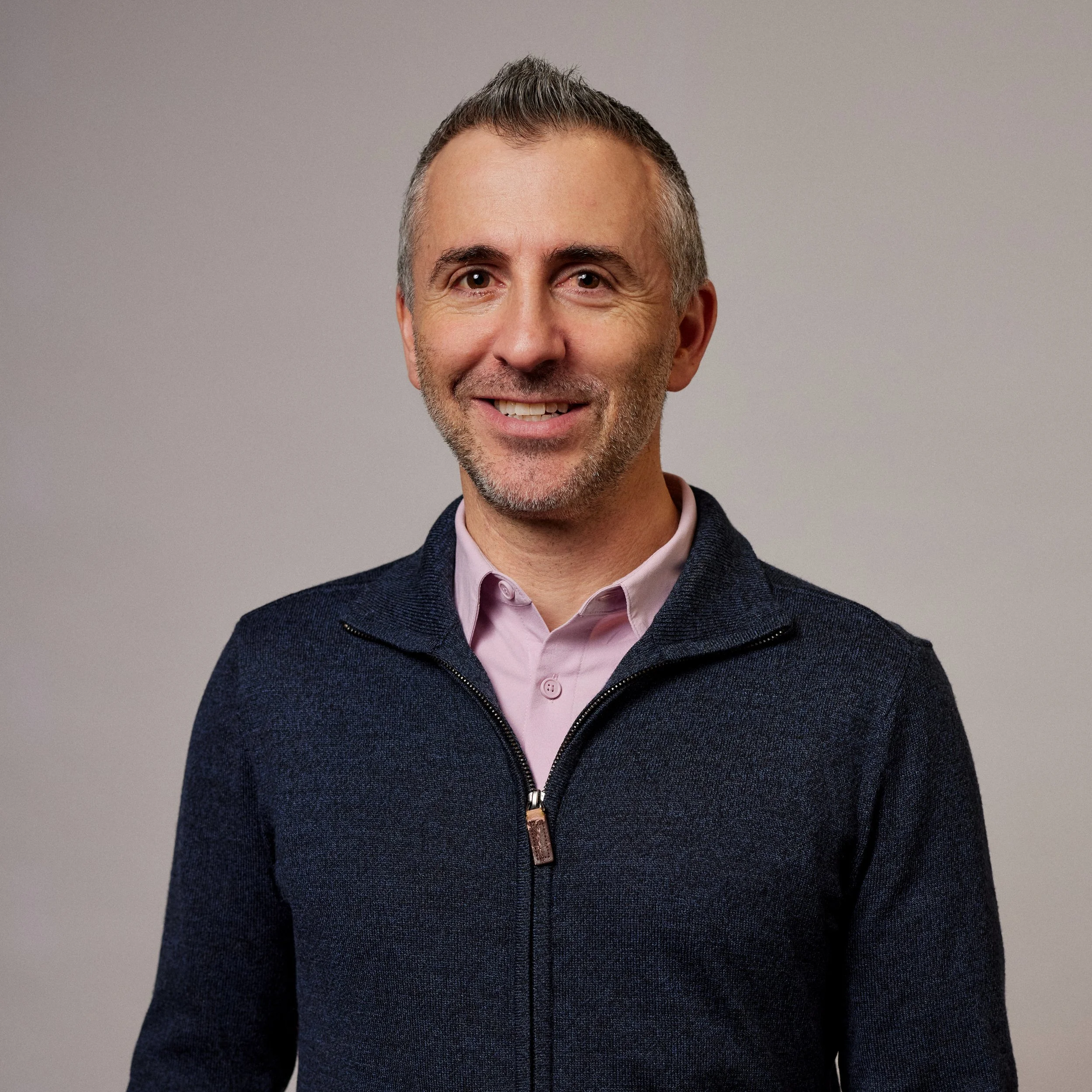
Corby Fine, MBA, ICF
Executive Career & Leadership Coach
Corby Fine is a certified executive coach (ICF) and MBA with 25+ years of leadership experience across startups and enterprise. He specialises in career transitions, leadership development, and helping senior professionals build their Wisdom Portfolio. He is the host of the Fine Tune Podcast and the author of the weekly Segment of One newsletter..
Book a free 15-minute session →